Interface Designs Steering Live Accumulator Adjustments Across Football Halftime Shifts, Tennis Set Deciders, and Horse Racing Stretch Calls
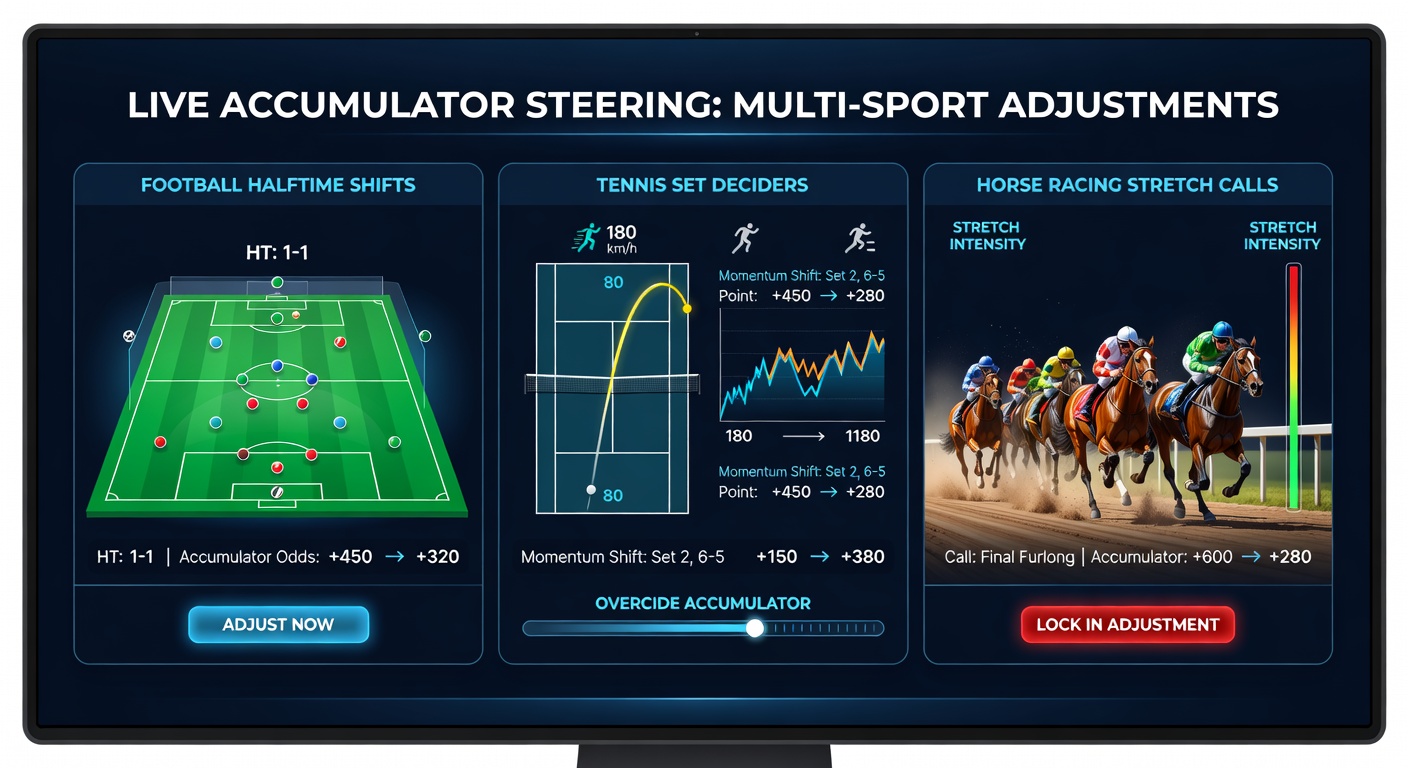
Interface designs in betting platforms shape how users modify live accumulators at critical junctures, including football halftime shifts, tennis set deciders, and horse racing stretch calls, with developers incorporating real-time data feeds, touch-responsive sliders, and conditional prompts that respond to unfolding events. These elements guide adjustments by presenting updated odds alongside simplified input mechanisms, allowing punters to alter stake distributions or add legs without leaving the active view. Data from industry reports shows that streamlined layouts reduce the time required for such changes by presenting grouped options in expandable panels rather than separate screens.
Football Halftime Interface Mechanics
During football halftime intervals, interfaces often display momentum indicators derived from possession and shot data alongside accumulator summaries, enabling users to tweak selections through drag-and-drop functionality or quick-tap modifiers. Platform designers integrate color-coded alerts that highlight variance in team performance metrics, which connect directly to bet legs and prompt reevaluation of remaining fixtures. Observers note that these features align with patterns observed in May 2026 scheduling, where multiple leagues overlap and create denser in-play opportunities across digital dashboards. Studies from the University of Nevada Reno's gaming research division indicate that such visual hierarchies help maintain accumulator integrity while users respond to injury updates or tactical shifts announced during breaks.
Tennis Set Decider Adjustments
Tennis applications surface set-decider interfaces that layer point-by-point probability models over accumulator trackers, using horizontal scrollable timelines to illustrate serve advantages and break opportunities. Users encounter modular buttons that isolate individual match legs for stake recalibration, with embedded confirmation sequences that prevent accidental overrides during high-volatility moments. These designs draw from user behavior analytics that track dwell times on probability charts, which researchers have linked to more frequent mid-set accumulator expansions in extended matches. What's interesting is how the same frameworks accommodate both singles and doubles formats by dynamically resizing input fields based on remaining sets.
Horse Racing Stretch Call Configurations
Horse racing platforms emphasize stretch-call interfaces that overlay pace and position data onto live accumulator views through animated track representations and fractional time splits. Punters access adjustment tools via swipe gestures that isolate final-furlong variables, connecting them to multi-race accumulators without disrupting overall stake totals. Evidence from European betting association publications reveals that these visual overlays correlate with higher rates of leg substitutions in races featuring tight finishes, as the layout prioritizes proximity to the finish line in its default zoom settings. Platforms tested in May 2026 incorporated predictive overlays that forecast potential payout ranges based on current positioning, integrating seamlessly with accumulator editing modes.

Cross-Sport Design Patterns and Data Integration
Common threads appear across these interfaces through shared use of persistent accumulator sidebars that update in parallel with sport-specific event streams, allowing simultaneous monitoring of football, tennis, and racing legs. Developers employ responsive grids that scale content density according to device type, ensuring that adjustment controls remain accessible during rapid score changes. Figures from the Australian Communications and Media Authority's digital engagement surveys highlight increased session durations when interfaces bundle contextual statistics with direct edit pathways rather than routing users through menus. And the patterns extend to notification systems that surface only when accumulator thresholds approach predefined variance limits, reducing cognitive load during concurrent events.
Those who've examined platform logs across multiple operators find that A/B testing of button placement and color contrast has produced measurable shifts in adjustment frequency, particularly when designs emphasize one-tap confirmations over multi-step verifications. These choices reflect broader industry moves toward unified data pipelines that pull from centralized sports feeds, creating consistency in how halftime, set-decider, and stretch data populate the same accumulator framework. The result is a landscape where interface decisions directly influence the timing and nature of live modifications without prescribing specific outcomes.
Conclusion
Interface designs continue to evolve around teh demands of live accumulator management in football, tennis, and horse racing, with each sport's pivotal moments informing tailored visual and interactive elements. Data integration and user flow optimizations support these adjustments across platforms, maintaining operational continuity even as events unfold in real time. Such developments underscore the role of thoughtful layout choices in shaping how accumulators respond to dynamic conditions.