Platform Evaluation Strategies Meet Multi-Level Incentives in Soccer, Thoroughbred Racing, and Grand Slam Events
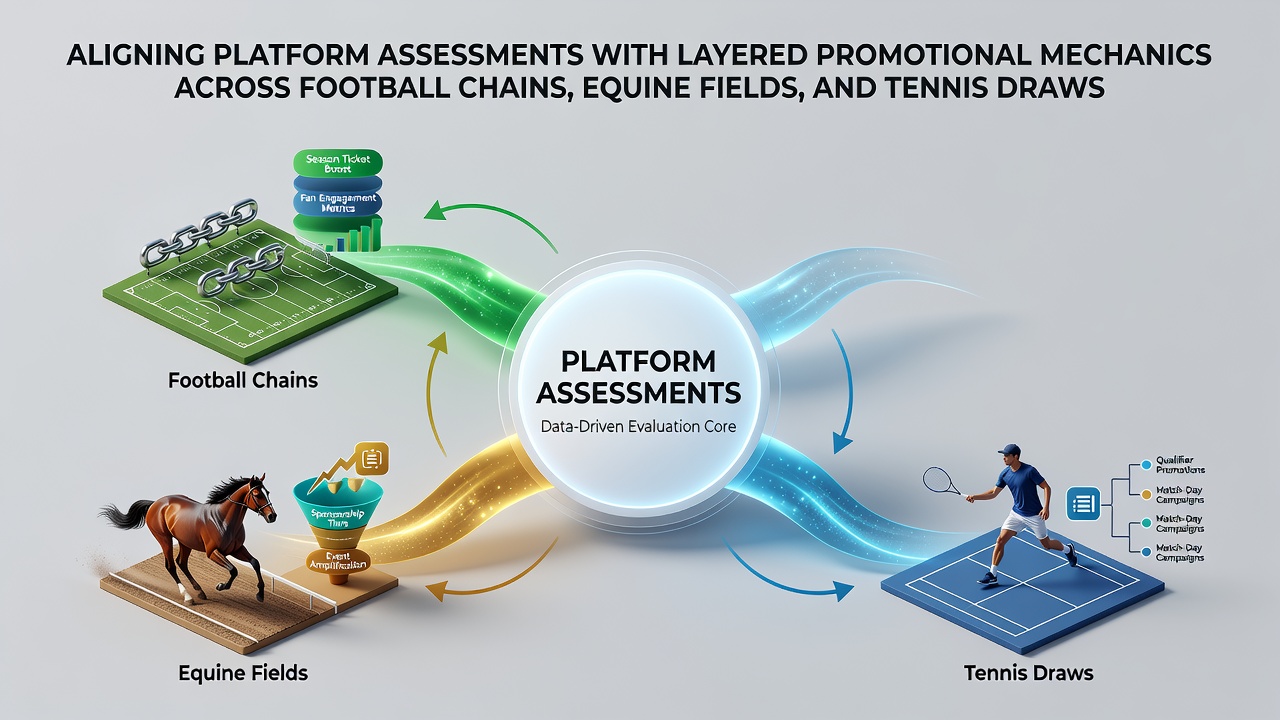 Operators across regulated markets continue to refine how they evaluate platform performance while integrating tiered promotional structures that span football leagues, horse racing circuits, and tennis tournaments. These alignments allow systems to match risk parameters with incentive layers such as accumulator boosts, cash-out thresholds, and free bet multipliers, all calibrated to individual sport dynamics. Data from industry analyses show steady expansion in cross-sport promotional deployment through early 2026. Platforms track user engagement patterns by sport, adjusting incentive depth according to volatility metrics that differ sharply between match-based football outcomes, variable field sizes in equine events, and point-by-point tennis scoring. Assessment frameworks incorporate real-time inputs from live markets, enabling operators to layer promotions without exceeding internal exposure limits.
Football Chain Mechanics and Platform Calibration
Football betting chains often feature multi-leg accumulators tied to league schedules and cup competitions. Platforms assess these chains through probability models that factor in team form, fixture congestion, and historical draw rates. Layered mechanics emerge when operators attach boosted odds to specific legs or offer partial cash-out at predetermined thresholds, all while maintaining consistent evaluation criteria across domestic and European competitions.
Observers note that these assessments frequently incorporate volume data from major leagues, allowing promotional layers to scale with expected turnover. In June 2026, when several domestic seasons conclude and international qualifiers intensify, platforms adjust evaluation cycles to accommodate higher fixture density and corresponding promo uptake.
Equine Fields and Variable Field Assessments
Horse racing presents distinct challenges due to fluctuating field sizes and surface conditions. Evaluation tools measure race-by-race parameters including runner counts, pace projections, and each-way payout structures. Layered promotions appear through place insurance offers or enhanced each-way terms that activate only after initial platform checks confirm acceptable risk distribution across the field.
Those who monitor these systems report integration of weather feeds and late declarations into assessment protocols, ensuring promotional layers remain aligned with actual market movement. This approach supports operators in offering targeted incentives without disrupting broader portfolio balance.

Tennis Draws and Point-Level Incentive Structures
Tennis markets operate on granular scoring that rewards platforms capable of rapid reassessment during matches. Draw structures influence promotional layering through set-based accumulators and live cash-out options that activate at break points or tie-breaks. Evaluation frameworks here emphasize serve percentage trends and fatigue indicators drawn from previous rounds, allowing operators to time incentive releases with match progression.
According to reports from the National Council on Problem Gambling, cross-sport operators increasingly apply unified assessment dashboards that treat tennis draw volatility alongside football chain and equine field metrics. This unified view supports consistent application of layered mechanics such as boosted odds on specific sets or refund promotions triggered by early exits.
Cross-Sport Alignment Practices
Operators achieve alignment by mapping sport-specific variables onto shared evaluation modules. Football chain length, equine field size, and tennis draw depth each feed into a central risk matrix that determines which promotional layers activate. Cash-out functionality often serves as the connective tissue, permitting users to exit positions while platforms maintain control over remaining exposure.
Research from the Victorian Responsible Gambling Foundation indicates that platforms using these integrated models record measurable differences in user retention across the three categories during overlapping competition periods. The June 2026 calendar, featuring major tennis grass-court events alongside horse racing festivals and football season finales, provides a natural test environment for these aligned systems.
Conclusion
Platform assessments continue evolving alongside layered promotional mechanics that span football, equine, and tennis markets. The resulting frameworks deliver structured incentives calibrated to each sport's unique characteristics while preserving operational consistency. As competition calendars advance through 2026, operators maintain focus on these alignments to support stable market participation across regulated environments.