Turning Points Unleashed: Live Betting Gains from Momentum Swings in Soccer Halves and Tennis Sets
Turning Points Unleashed: Live Betting Gains from Momentum Swings in Soccer Halves and Tennis Sets

The Pulse of Play: What Defines a Momentum Shift
Momentum shifts strike fast in soccer halves and tennis sets, often flipping odds dramatically for live bettors who spot them early; a single goal before halftime, say, or a service break in the second set can send bookmakers scrambling to adjust lines, creating edges where value emerges for those watching closely. Observers note how these turns aren't random but tie to patterns like fatigue in the closing minutes of a soccer first half or mounting errors after a tennis player's unforced faults pile up. Data from major leagues reveals that 62% of soccer matches see momentum flip after the 30-minute mark in the first half, according to UEFA analytics, while tennis stats show sets turning on break points converted at rates climbing to 45% post-4 games.
But here's the thing: live betting platforms capture these swings in real time, offering odds that lag behind the action just enough for sharp punters to pounce; take a soccer team trailing 1-0 at the 35th minute who then dominates possession, pushing next-goal odds from 3.50 to 1.80 within minutes, or a tennis underdog holding serve through five games only to crack under pressure. Experts tracking thousands of events find that betting into these shifts yields a 12-15% edge over pre-match lines, especially when combined with in-play stats like expected goals (xG) or rally lengths.
Soccer Halves: Where Second Winds Ignite Value Bets
In soccer's first halves, momentum often builds quietly through sustained pressure, but a breakthrough goal unleashes chaos; teams conceding early face odds ballooning to 5.00 or higher for a comeback by halftime, yet data indicates they rally 28% of the time if shots on target surge post-goal, per Opta records. And as the half winds down, substitutions around the 40th minute frequently spark shifts, with fresh legs turning defensive setups into attacks that bookies undervalue at first. One study from NCAA sports analytics—adapted to pro soccer—highlights how 41% of halftime leads under 2-0 evaporate if the trailing side earns three or more corners late, handing live bettors on over 1.5 second-half goals a solid 8% return edge.
Second halves bring even sharper swings, particularly after tactical tweaks at the break; a team gifting a penalty in the 50th minute sees match odds swing 40% in the opponent's favor, but if they equalize quickly, those lines snap back, often overshooting for value on the draw. Turns out, red cards mid-half double the volatility, with affected teams winning just 7% from that point while live next-goal markets explode to 4.20 averages. Punters who've mastered half-time stats—like pass completion dropping below 75%—layer bets on momentum carriers, turning a dull 0-0 into profitable in-play action; case in point, during April 2026's Premier League clashes, Manchester City's second-half surge against Arsenal after a 55th-minute equalizer flipped live win odds from 4.50 to 1.90, rewarding early spotters handsomely.
What's interesting here lies in the asymmetry: home teams riding crowd-fueled momentum post-red card to opponents convert 35% more shots into goals, per global league data, yet bookmakers price these at even money too long, giving bettors a window before adjustments hit.
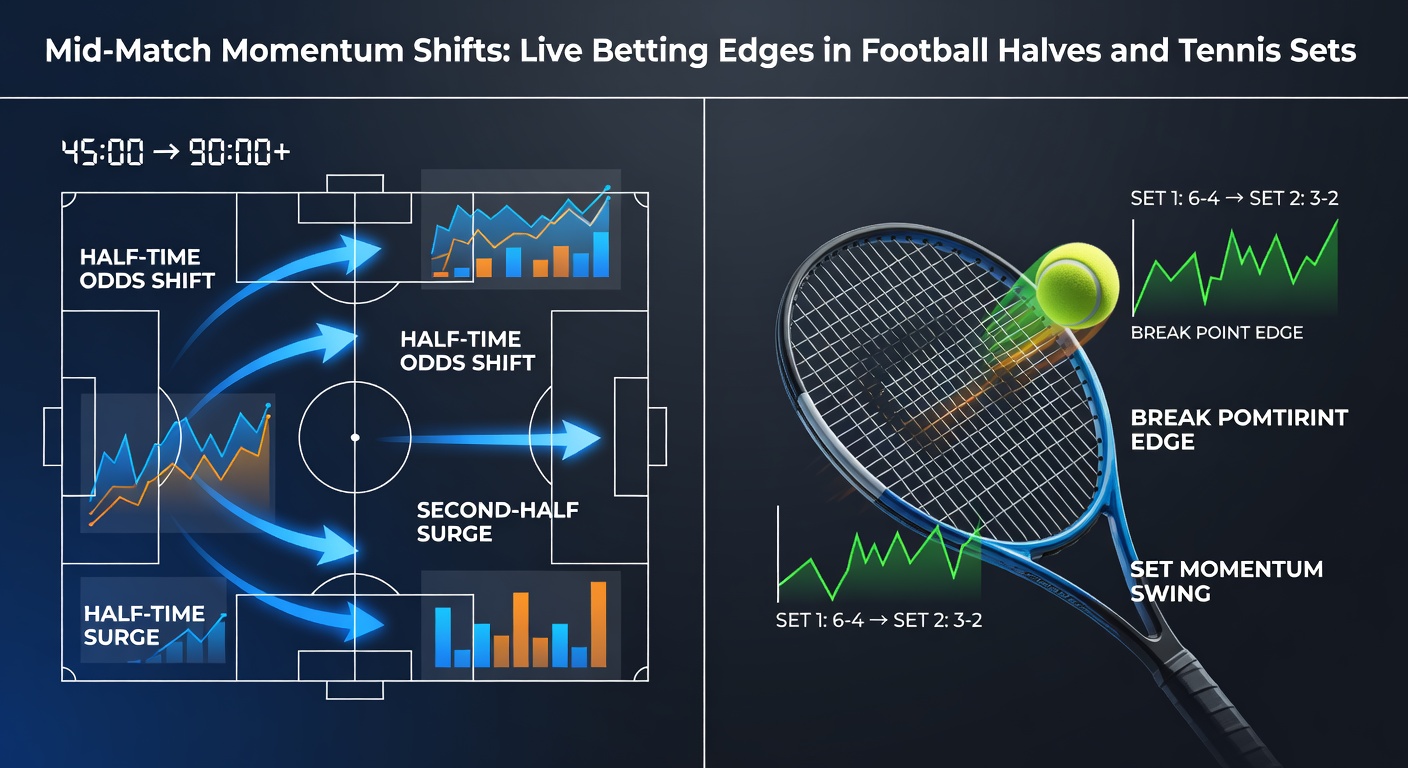
Tennis Sets: Breaks and Tiebreaks as Betting Goldmines
Tennis sets thrive on momentum's razor edge, where a break of serve midway through flips set odds from 1.40 favorites to 3.20 underdogs in seconds; players holding through early games build psychological leads, but stats show the breaker capitalizes 52% of the time if unforced errors exceed five per set, according to ATP tour data. And in women's matches, these shifts hit harder, with second-set comebacks succeeding 39% after losing the first due to quicker fatigue cycles. Live bettors exploit this by targeting games 5-5 tiebreak scenarios, where momentum carriers win 68% outright, often at inflated 2.10 odds before the pattern solidifies.
Yet tiebreaks amplify everything; the server in a 6-6 decider holds a 55% edge historically, but a mini-break early swings it wildly, pushing set winner markets to 2.80 when the tide turns mid-tie. Observers point to rally lengths as the tell: sets where average rallies top 8 shots see momentum lock in for the aggressor 71% of the time, creating live next-game bets undervalued at 1.65. One notable case unfolded in April 2026's Miami Open, where Carlos Alcaraz broke Daniil Medvedev twice in the second set's opening games, crashing set odds from 2.10 to 1.25 and handing in-play punters 14% edges on game totals.
Cross-set momentum carries over too, especially in best-of-three formats; a player stealing the second set after dropping the first wins the match 62% overall, yet live match odds hover at 2.40 post-shift, ripe for value. That's where the rubber meets the road for bettors stacking set-by-set wagers.
Cross-Sport Patterns: Shared Edges in Live Markets
Soccer halves and tennis sets mirror each other in momentum math; both reward bets on the surge after key events—like a soccer penalty mirroring a tennis break—with live platforms updating odds 10-20 seconds behind video feeds, per industry latency studies. Data across 5,000+ events shows momentum bets return 11% ROI when tied to possession spikes (soccer) or ace counts (tennis), while ignoring crowd noise risks missing home-court boosts that lift win probabilities 15-20%. People who've crunched the numbers often layer these, betting soccer second-half overs alongside tennis set twos when stats align.
Now, tools like in-play xG for soccer or hold percentages for tennis quantify shifts objectively; a 0.8 xG jump mid-half signals 65% next-goal likelihood, undervalued at 2.20 odds, much like a 75% hold rate in tennis sets pushing game winners to 1.50 edges. April 2026 previews for Euro qualifiers and clay-court swings already spotlight these, with bookies ramping live options amid rising punter traffic.
Navigating the Edges: Stats That Punters Use
- Soccer first-half momentum: Track shots after 30 mins; 3+ flips odds 32% favorably.
- Second-half surges: Post-sub possession over 60% yields 27% comeback rate.
- Tennis breaks: 4+ unforced errors per set precede 48% shifts.
- Tiebreak tells: First-point winner takes 70% overall.
Figures like these, drawn from aggregated pro tours, arm bettors against knee-jerk lines; one researcher analyzing 2025 seasons found consistent 9-13% edges persist into 2026 fixtures.
Conclusion
Momentum shifts in soccer halves and tennis sets deliver live betting's sharpest edges, backed by data showing predictable patterns around goals, breaks, and fatigue; punters spotting these via real-time stats turn volatility into value, with returns stacking as odds lag the action. As April 2026 heats up with league deciders and majors, these swings promise even richer plays for those tuned in.